You were probably never taught strategy (and it’s not your fault)
I've had a couple of great strategy conversations recently, and they both reinforced points I've made before.
In my monthly strategy masterclass, I had the opportunity to dig really deeply into one person's organisational challenges when it came to strategy. She was thinking strategically in her HRD role, 100%, but she was dealing with a CEO and leadership who were not.
The "strategy" she had been given to work with wasn't much of a strategy. It was "growth". Isn't it always?
The business knew it wanted to grow, but it hadn't thought through or articulated how, where, and how much by. She and I had a deep dive into this and I helped her work out some great questions she can ask her leadership team to get them thinking along the same lines. She also raised a really interesting point that below the leadership team barely anyone in the organisation had a clue what the business strategy was.
How can we ever expect everyone in an organisation to pull in the same direction if nobody knows what that direction is?
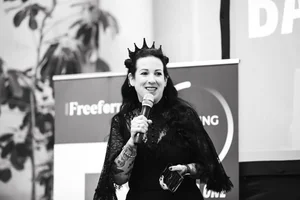
My second conversation was a recording of an "In Conversation With" (a YouTube series I do) with Fay Wallis of Bright Sky HR. Fay also runs a strategic leadership course for HR professionals and rather than compete with each other (which is neither of our styles), we decided to collaborate on a conversation about strategy.
If I could summarise a few of the core insights from that conversation, they would be as follows:
Most HR professionals have never actually been taught strategy — not because it wasn't important (it always has been, in my view) but because for decades nobody expected HR to be strategic, so there was nobody to learn it from.
Fay put it well: if there was no expectation that HR should be a strategic function, it simply wasn't something you'd learn from someone more senior than you. That's definitely starting to change and some formal training covers it more now, but for a huge swathe of people who've been in the profession for any length of time, it never came up and so they haven't ever learned it.
Which brings us back to the "growth" problem. "We want to grow" is not a strategy, it's a target. I'll keep on banging this drum until I'm blue in the face.
Strategy is how you're going to get to where you want to be, and most organisations — especially smaller ones — have never genuinely worked that through. I used my beloved Google Maps analogy: you need to know where your blue dot is and where your red pin is, because the line between them is your strategy. If you can't articulate either, you can't navigate between them.
The number of CEOs who haven't actually thought past "more revenue than last year" would surprise you — except it probably won't, especially if you've been reading my content for the past couple of months.
The operational versus strategic divide is largely a false one, and both Fay and I have been saying this for a while. If what you're doing is helping the organisation move towards its goals, it's strategic, regardless of what type of task it is. Recruitment can be highly strategic if you're hiring into an area that's causing the organisation real problems right now. The idea that you're doing "operational HR" now but will somehow graduate to "strategic HR" later misunderstands what strategic thinking actually is. You're probably already doing it.
Confidence wobbles at senior level usually come down to something specific rather than a general sense of not being good enough. Most often, it's not feeling commercially fluent enough: you've built your career as an HR expert and then suddenly you're in a leadership team being asked for opinions on things that don't have an obvious people lens. It feels uncomfortable, but it's also a lot more fixable once you understand the business better — and once you accept that no one expects you to know absolutely everything, apart from you.
The answer isn't to become a finance director; it's to understand enough to ask the right questions. Which, as Fay pointed out, is exactly what coaching skills teach you to do anyway.
All things I have said before, and issues that Fay has also seen repeatedly with her clients and those attending her programme.
Which of these is the biggest issue for you, do you think? I'd love to hear where you're at with it — drop a comment below and let me know.
You can watch the full conversation with Fay on the Evolving HR YouTube channel here: Watch Conversation